

Imagine a capybara driving a getaway car through a supermarket. The pitch is ready. The game still needs a corner that feels good to take, a reason to brake and a camera that can see past the cheese aisle. Those are less amusing sentences to put in a prompt. They are also where the work begins.
Google announced Playground on October 7, 2026, an experimental platform for creating games through text prompts. That proposition gives the capybara a possible route out of the group chat. It also offers a useful way to think about AI entertainment: pay attention to what happens after the initial surprise wears off.
The second lap
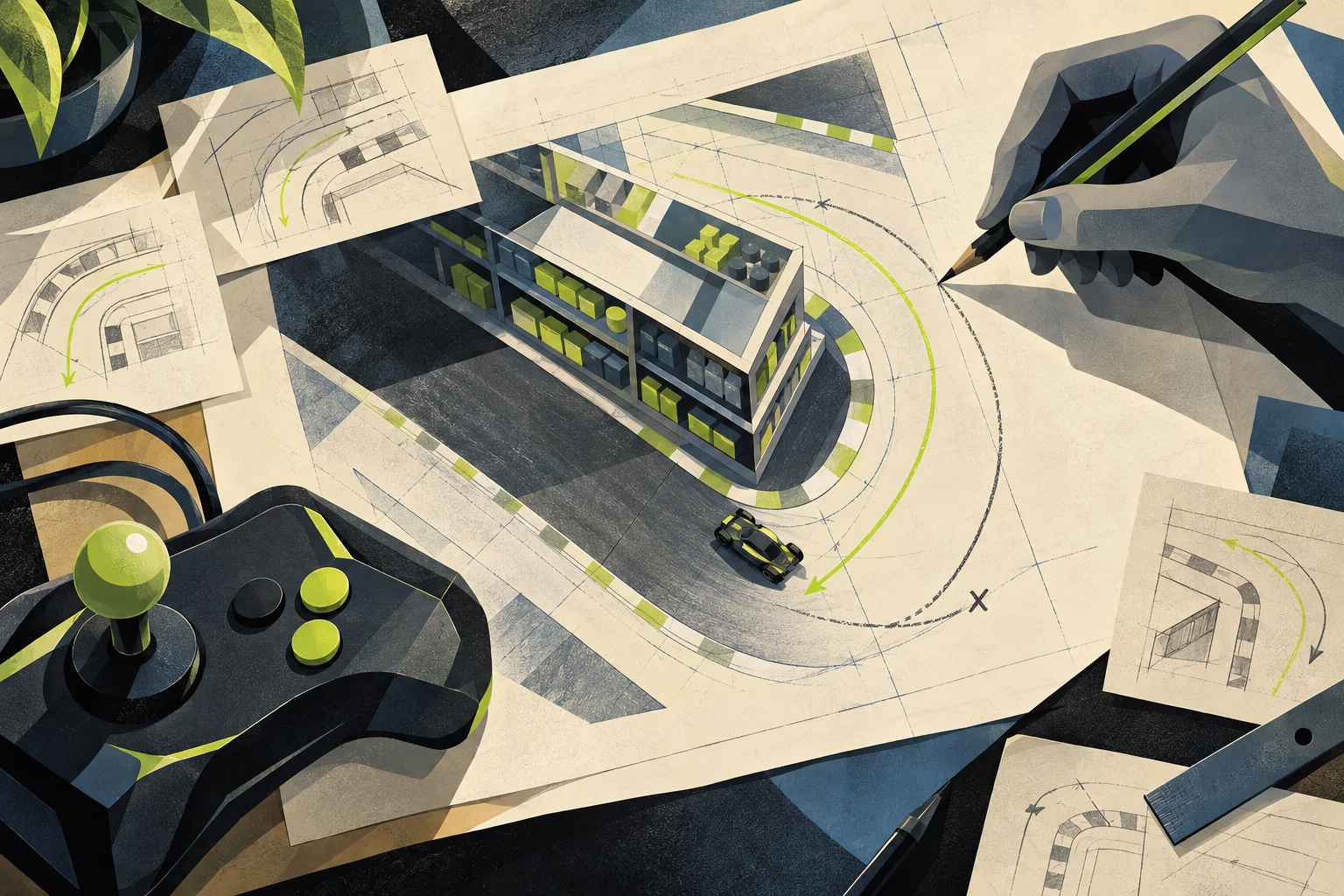
The imaginary supermarket racer is our example, not a Playground game we have tested. Picture its first corner. If the player crashes, can they understand why? If they recover, does the recovery feel earned? A joke can persuade somebody to click. A readable corner gives them a reason to try again.
The second lap is the useful one.
By then, the premise has done its work. The player knows there is a capybara in the driver’s seat. Now they are noticing whether braking helps, whether the camera hides an obstacle and whether collecting a bonus requires an interesting risk. These are specific questions. They are also much more productive than asking for something to be “more fun.”
For a beginner, identifying the change could be as useful as making it. “The corner is too tight to see the obstacle” gives the tool something to work on. “Make it more fun” leaves almost everything undecided. Even removing a feature can be progress if it makes the remaining game easier to understand.
Who gets to try
The access rules currently cover users aged 18 or over in the United States: catalog play is free; free creation access has a waitlist; a Google One AI subscription unlocks immediate creation access. Brazil is outside that launch availability.
For readers in Brazil, the location restriction is the first thing to check before paying for access. A subscription does not remove it. The announcement can be interesting without being something available to spend this evening trying.
A manageable experiment would be one character, one objective and a minute of play. Ask someone to try it without coaching them through the controls. If you keep wanting to explain where to go or why a collision happened, write those moments down. They show where the game needs to communicate better.
Google also says Unity Spark is in testing, with closed beta and Playground integration still ahead. That future-facing part deserves patience. More elaborate visuals would give our hypothetical supermarket nicer refrigerators; the awkward corner would still demand attention.
A challenge made for three friends can be enough. It need not support a campaign or keep an audience busy for months. There is room for games that work for an afternoon, provided the people playing enjoy that afternoon.
MaisFPS has not tested Playground. The appealing possibility in the announcement is a shorter path from an odd idea to something another person can try and criticize. The capybara supplies the joke; the next version needs to improve the driving.
Fun has a very small patience budget.
Got a different take? I’d love to hear it. hello@maisfps.com