
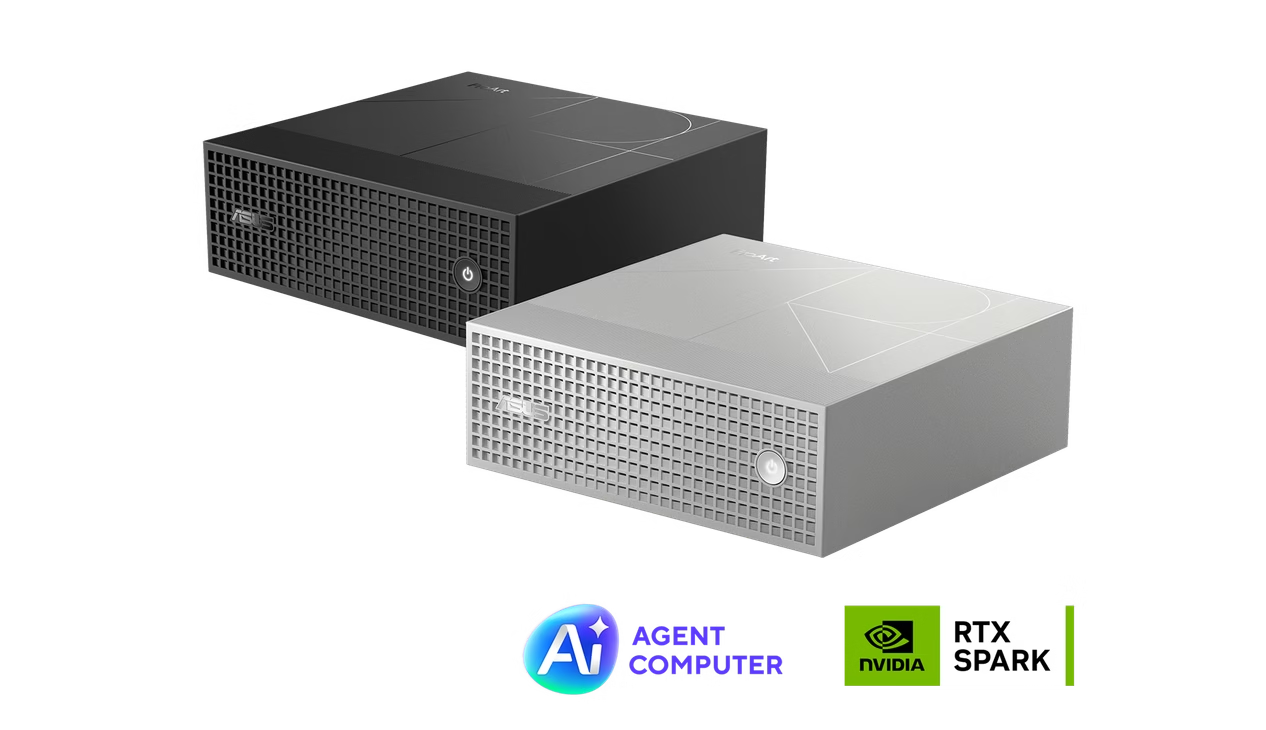
NVIDIA’s mini PC isn’t fighting for a spot under the TV. It wants to sit beside your router and keep working while you’re on another machine. On November 18, NVIDIA announced the first RTX Spark desktops from ASUS, Dell and MSI. It’s a different pitch from October’s laptops: run models, renders or scheduled jobs on a dedicated machine with the project files.
Why the 128 GB matters

The chip pairs a 20-core Grace CPU with a Blackwell RTX GPU with 6,144 CUDA cores. ASUS offers its ProArt GR1X with 64 GB or 128 GB of unified memory. The CPU and GPU draw from the same pool. It isn’t 128 GB of dedicated VRAM, nor do you get a separate graphics allocation on top. The OS, apps and models all take a share.
NVIDIA cites 120-billion-parameter models, but that number doesn’t tell you how fast they’ll respond or what precision they’ll run at. The advertised peak of one petaflop uses FP4, a low-precision format. That isn’t a gaming benchmark or render-speed measurement.
What to check before buying
These systems run Windows on Arm. Some Adobe apps have native versions, and NVIDIA points to local generation workflows in ComfyUI. Check the whole setup anyway: the app version, plugins, devices and the AI model you use. Running one task locally doesn’t make a hybrid workflow offline. The announcement also isn’t proof of stock or price in your region.
Mais FPS take
Spark makes the strongest case when you know what won’t fit in your GPU or what that workload costs in the cloud. If gaming comes first, wait for independent tests of your games and compare it to a traditional desktop.
Sources
Cover: ASUS ProArt GR1X. Image from ASUS.