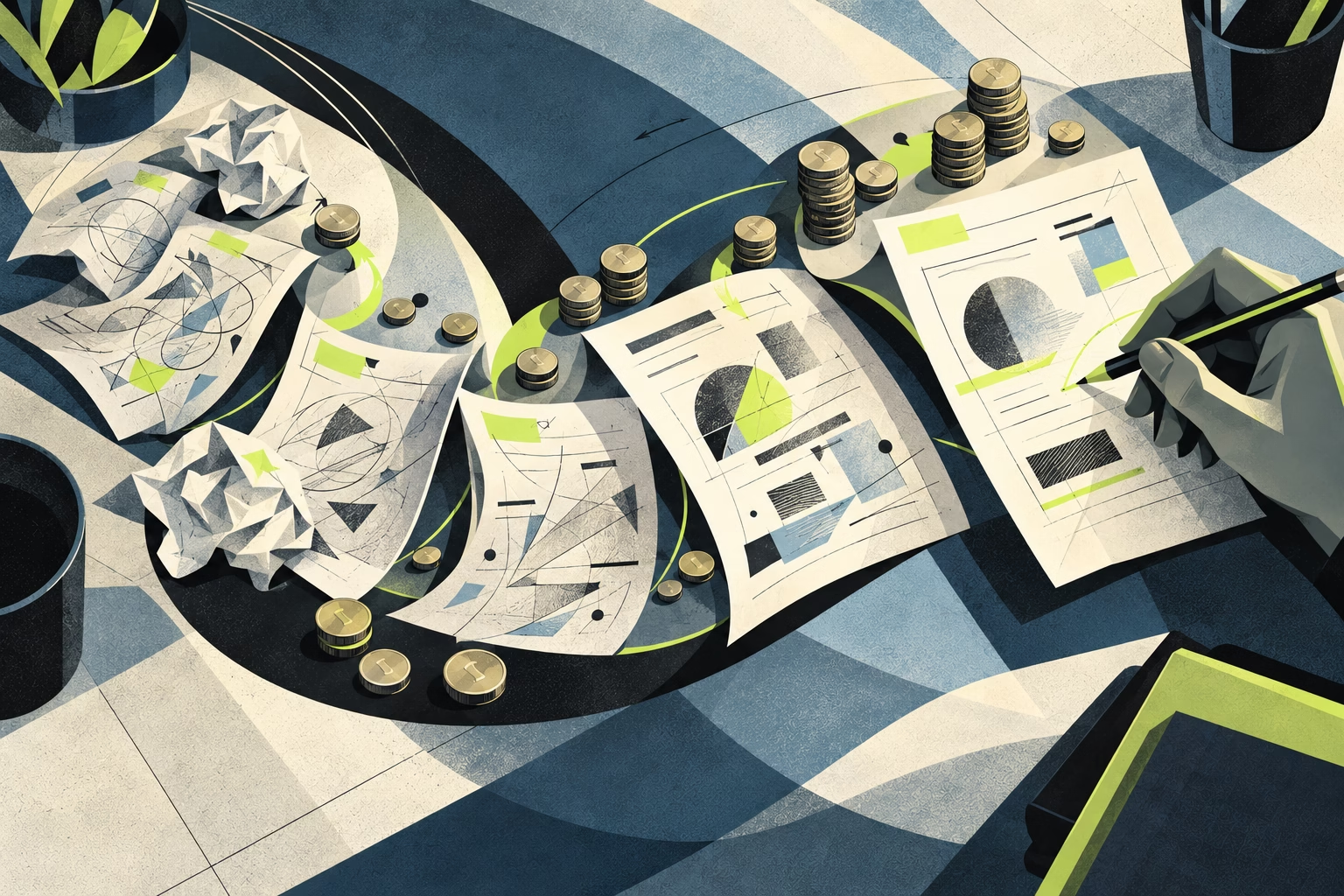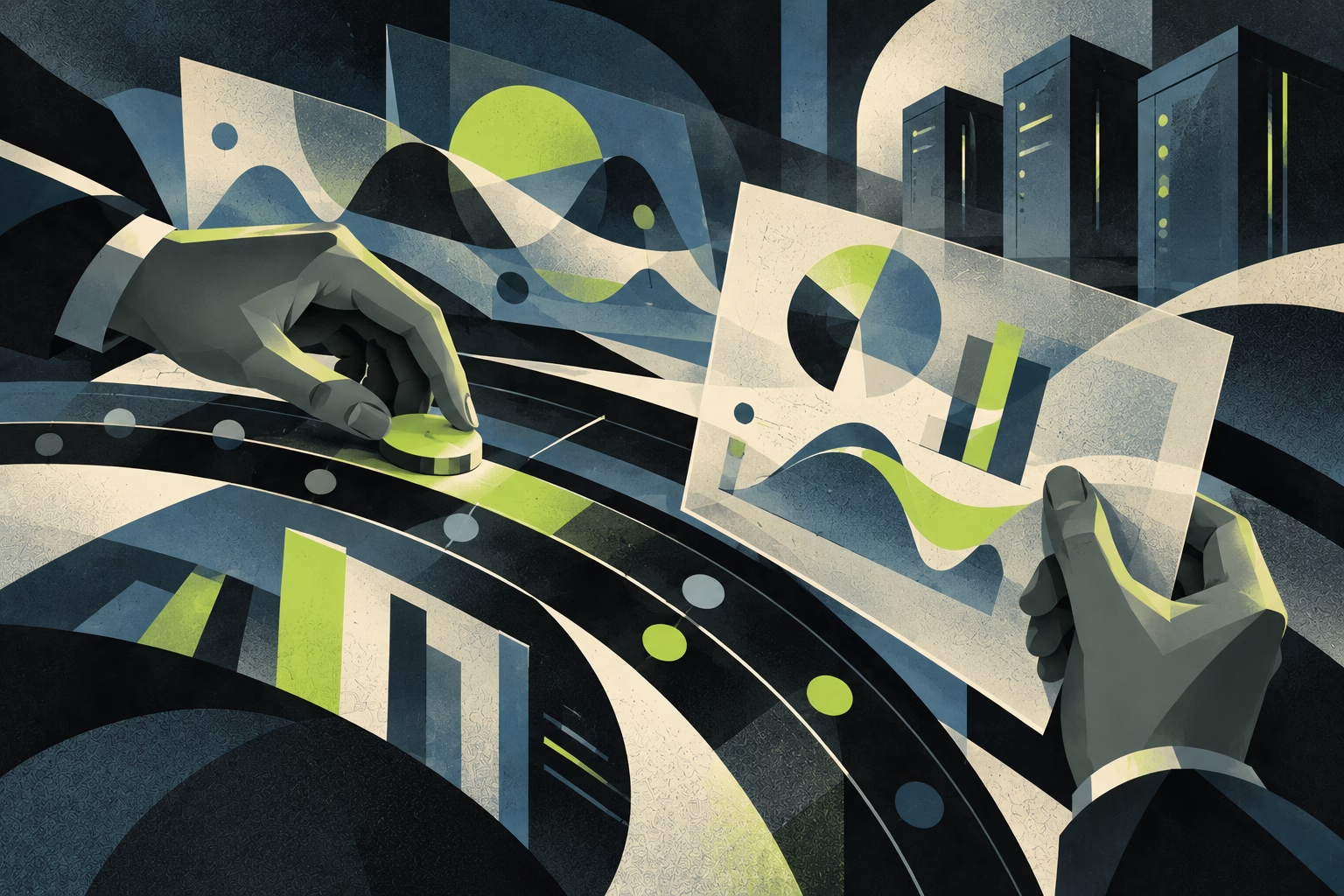
Making the record is only half the job. Then come the releases, the pitches, the shows, the polite messages to people who might listen. Michael Smith’s streaming scheme dispensed with that second half. It manufactured the audience too.
The facts are considerably less charming. On 6 October 2026, Michael Smith received 18 months in prison for conspiracy to commit wire fraud and an $8,091,843.64 forfeiture order. According to the US Justice Department, the scheme combined hundreds of thousands of AI-generated songs with up to 10,000 automated accounts operating simultaneously.[1]
The conviction concerns fraud. Whatever one thinks of AI-generated music, the offence here involved fabricating listening for payment. The same trick would be fraudulent with a guitar recorded in a bedroom.
The instrument is a poor place to begin an audit.
A musician can spend years looking for an audience. That is part of what makes this case so bleak: the scheme treated listeners as another production problem to automate. There is a grim sort of efficiency in a music business that has eliminated the need for anyone to enjoy the music.
It would be comforting to blame the songs. Imagine, though, the finest album ever made playing through accounts created to generate fraudulent royalties. Better songs would do nothing to fix the accounts. Arguing over the quality of AI music offers streaming services a convenient distraction from a harder question: how much can they actually establish about the listening they pay for?
Who pays for the imaginary fans?
Take a hypothetical royalty pool of $100, divided according to eligible listening. Add fake plays and the share attached to genuine listening shrinks, unless the fraud is excluded. The pool still contains $100. Someone else now gets more of it.
That is a simplified illustration; services do not all use an identical payment formula. It shows why this is more than a vanity-metric problem.
A stream counter is effectively financial infrastructure wearing headphones.
For an independent artist, the consequences are easier to picture than the accounting. Rehearsal rooms, artwork and mastering come with real invoices. A fabricated audience competes for money without requiring anyone to discover a song, recommend it or want to hear it again. Artists already have enough difficulty getting paid for those things when they actually happen.
A dashboard might count every request for a file correctly and still tell us very little about who wanted to hear it. Once money follows that number, verifying what it represents becomes essential. An impressive activity graph cannot do that work on its own.
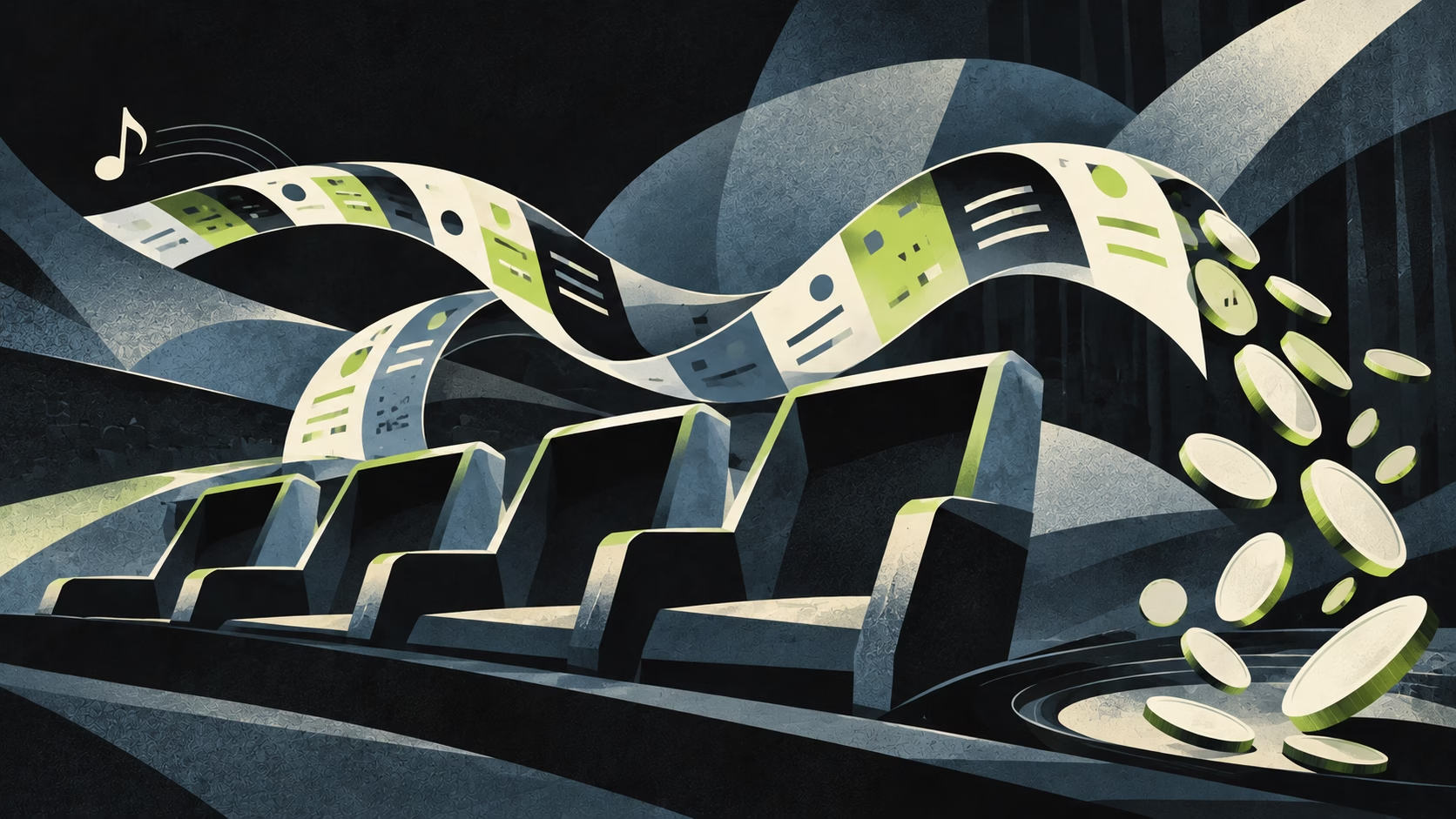
Start with the payments
Labelling generated music could help listeners choose what to play. Checking whether a playback represents genuine listening requires a different investigation: accounts, listening patterns, payments and the connections between them. A label on the recording leaves that job unfinished.
The investigation also needs room for ordinary oddness. People play the same track obsessively. Small artists sometimes find an audience overnight. Repetition or sudden popularity, taken alone, would make a poor case against either one. Fraud detection should be able to explain more than “this looks unusual.”
And when it gets something wrong? A musician whose payment is withheld or whose release disappears needs a reason they can understand and a practical way to contest it. An appeals process that takes more time than a small artist can spare is hardly much of an appeal.
Streaming services should be pressed for useful measures of both problems: fabricated listening that gets paid, and legitimate listening that gets caught in the filter. Disputed payouts and detection errors deserve scrutiny alongside the size of the catalogue. The figures will be less glamorous. They will also tell artists more about whether they can trust the system with their work.
Smith’s automated audience never needed a rehearsal room, a ticket or a favourite song. It needed to be counted. That is an expensive distinction for everyone who still has to find real listeners.
Source
[1] US Department of Justice, sentencing announcement, 6 October 2026.
Got a different take? I’d love to hear it. hello@maisfps.com