The new ROG Strix includes a presence sensor and burn-in protection features. Its 450-nit HDR peak is one detail to weigh before choosing.
AI-generated concept illustration / Mais FPS. It does not depict the actual model or demonstrate performance.
A big screen for the campaign and the next match
The ROG Strix OLED XG32UQDS brings together two priorities that often compete when choosing a monitor: playing in 4K on a large screen and keeping a high refresh rate. The ASUS model, covered by TFTCentral on October 9, combines a 32-inch QD-OLED panel with 180 Hz.
That combination will catch the eye of players who switch between visually rich campaigns and competitive matches. Those 180 Hz are the display's ceiling, though: reaching it at 4K depends on the game, graphics card and settings. Buying the monitor does not take the rest of the PC out of that equation.
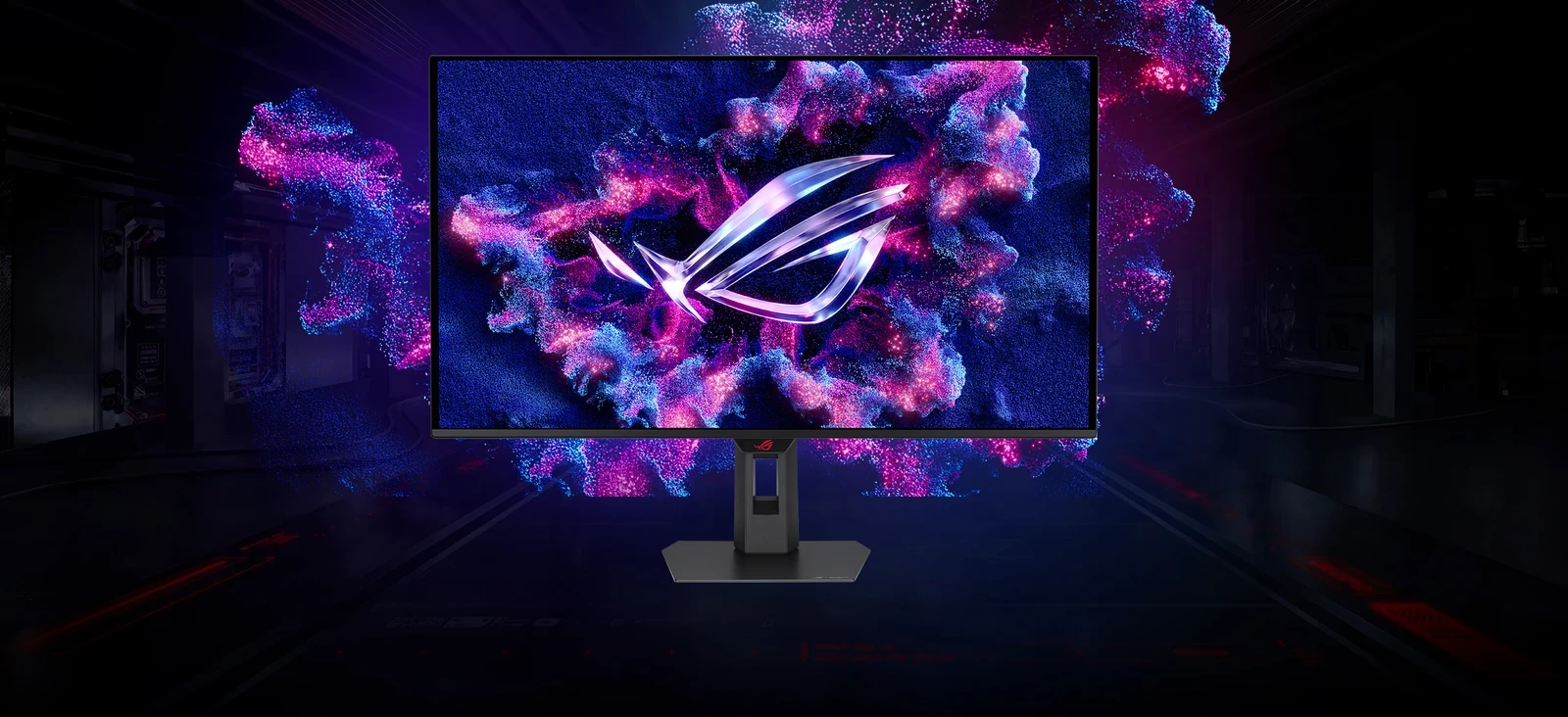
The HDR figure deserves a closer look
The ASUS specification sheet lists a 450-nit HDR peak and 250 nits of typical brightness. Nits measure brightness. Those are separate figures for different conditions; 450 nits should not be read as brightness sustained in every scene. The monitor supports HDR10.
If you want explosions, sunlight through a window or a city's neon signs to stand out, that is an important part of the comparison. Resolution, screen size and the OLED label alone cannot tell you how each of those scenes will look. Independent measurements are still needed to assess this model's HDR performance and how it handles a bright room.
The screen notices when you leave
The Neo Proximity Sensor detects when the user steps away and replaces the content with a black image, restoring it on their return. Detection distance is adjustable. According to the official product page, it is part of OLED Care Pro, a suite that also includes pixel cleaning and adjustments for static elements.
It is a useful idea for breaks between matches and for anyone who leaves their PC running when they walk away. These features aim to reduce the risk of burn-in, or persistent marks on the panel; they do not promise that wear has ceased to exist. Following the manufacturer's care instructions still matters with automatic protection enabled.
A PC and console on the same desk
Connections include two HDMI 2.1 ports, one DisplayPort 1.4 with DSC and a headphone output. The specification sheet also lists FreeSync Premium Pro and G-SYNC compatibility. There are no built-in speakers. The stand offers height, tilt and swivel adjustment, helping position a display this large for everyday use.
The buying decision still needs a price
Pricing and availability had not been confirmed in the October 9 report. That makes it too early to call the XG32UQDS an inexpensive OLED or estimate a Brazilian price. Its intended role is already clear; a buying decision still needs an actual price and tests showing how the panel delivers on those specifications in everyday use.
Sources
- TFTCentral: ASUS XG32UQDS announcement (2026-10-09)
- ASUS: ROG Strix OLED XG32UQDS features (Accessed 2026-10-14)
- ASUS: XG32UQDS technical specifications (Accessed 2026-10-14)