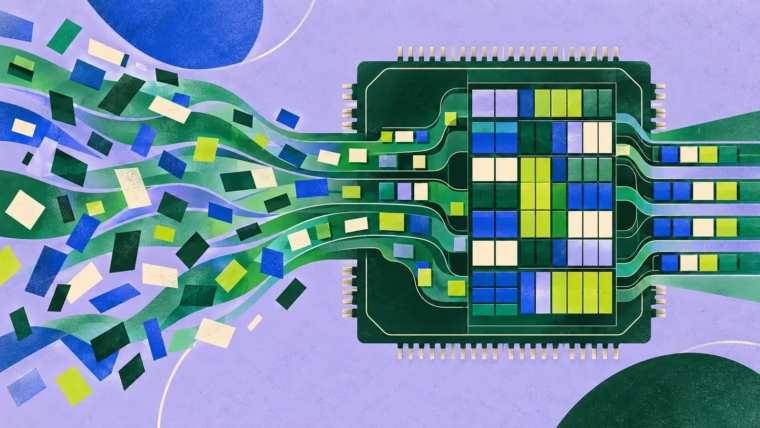
Fifteen TV boxes shared the work of running an AI, generating roughly one token every 2.6 seconds.
AI-generated concept illustration / Mais FPS. Not an actual capture.
The bill and the wait
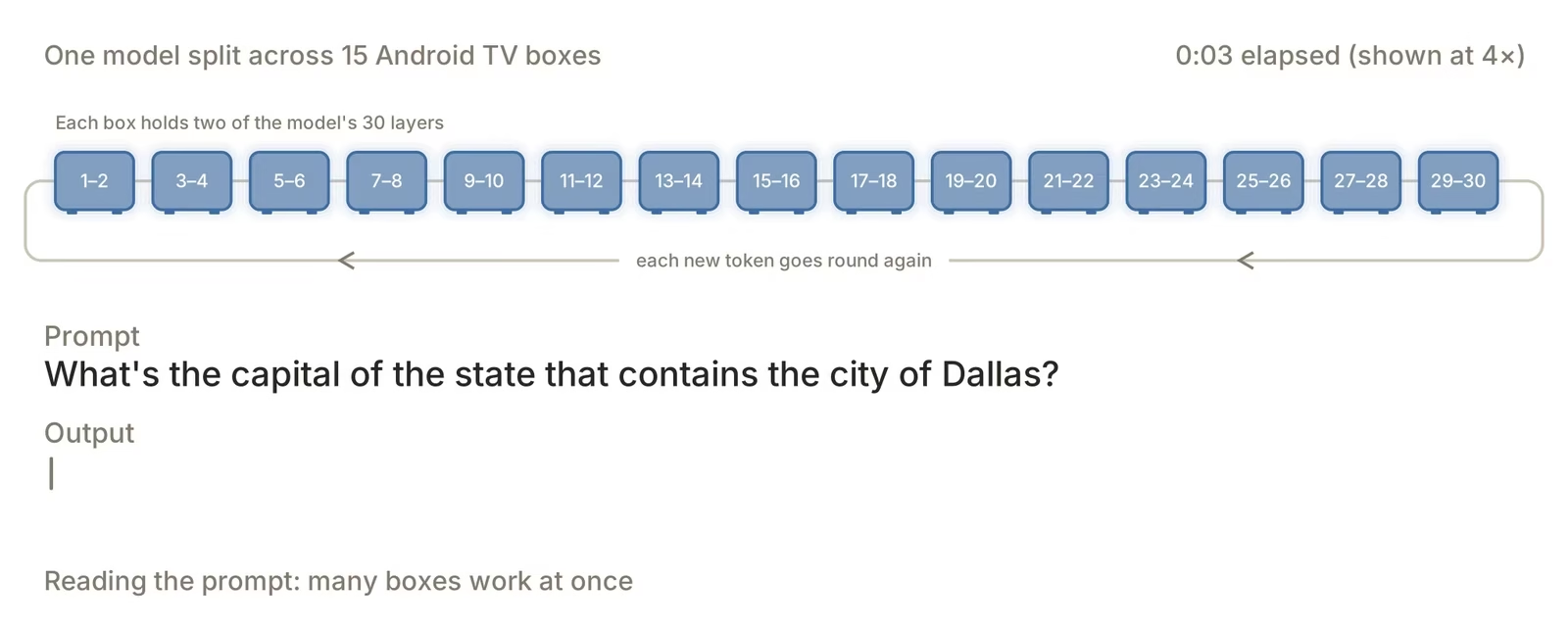
Anthropic split an AI model across 15 TV boxes costing roughly US$55 each: about US$825 in devices alone.
The AI ran at 0.39 tokens per second, or roughly one token every 2.6 seconds.
A token is a fragment of text: it can be a whole word or part of one, as Hugging Face explains. A single sentence can therefore require several tokens. Imagine the patience needed to hold a conversation at that pace.
Why join so many boxes
An AI model needs to fit into memory to work. Splitting it lets several machines pool their capacity: each holds a portion and passes its results to the next. That is the principle behind projects such as Petals. Communication between the devices takes time, adding a cost to the arrangement.
Could it carry on by itself?
Could an AI find another computer, copy itself there and keep running without human help? The study investigates that independence and the risk of using machines without permission.
Another test used computers imitating TV boxes, with easy access. An AI on a separate server installed another AI there. The experiment did not demonstrate an AI copying itself and continuing to run on its own outside the conditions set up by the researchers.
Sources
- Anthropic — AI models may be capable of self-replicating without access to a datacenter (2026-10-12)
- Petals: Collaborative Inference and Fine-tuning of Large Models (2023-03-02)
- Hugging Face — Tokenizers (Accessed 2026-10-13)