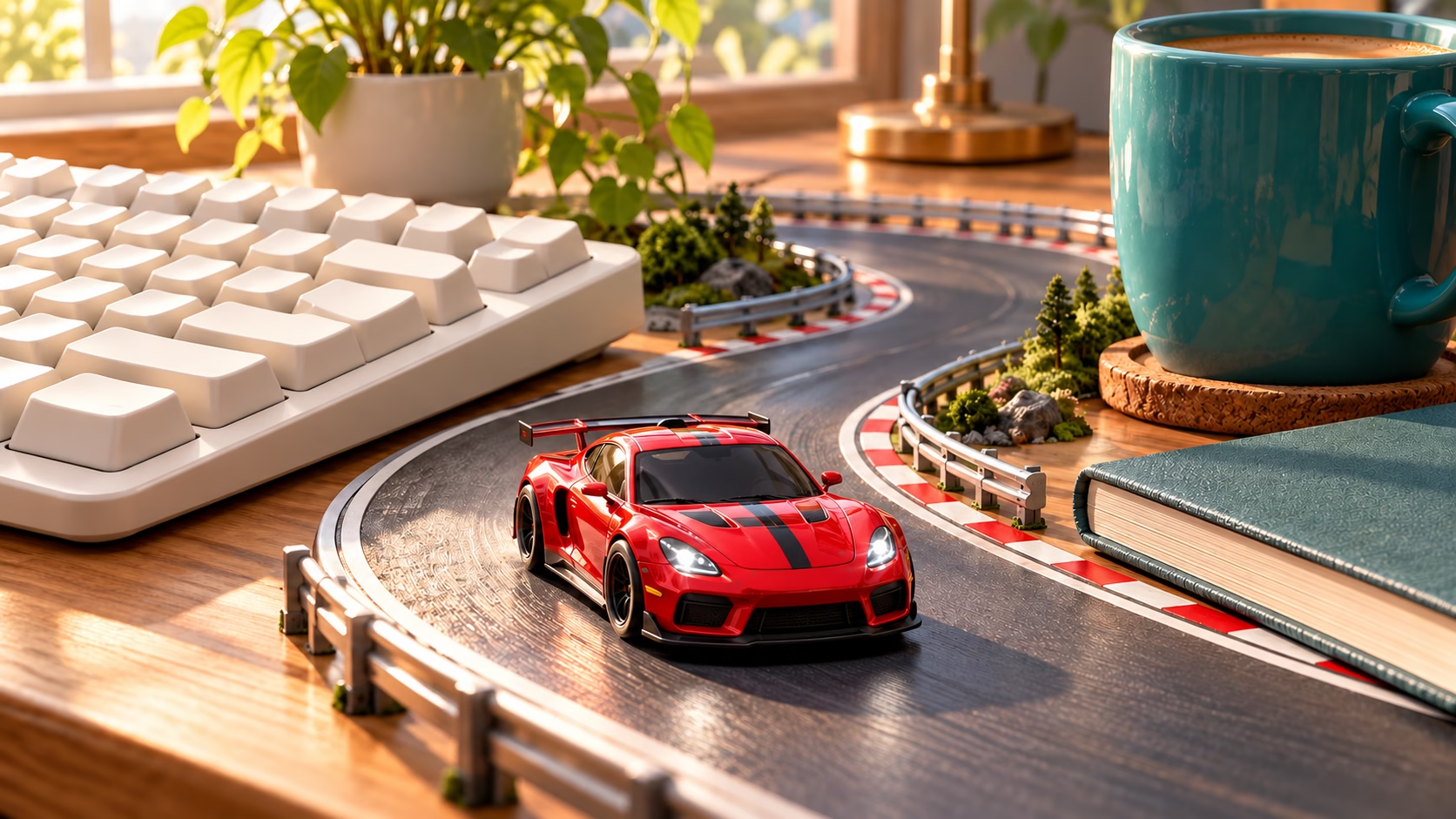
AI-generated conceptual illustration / Mais FPS. Not a screenshot of Google’s demonstration.
At toy-car height, a desk has the makings of a racetrack: tight gaps, awkward obstacles and an edge you would rather avoid. Google has built that idea into a miniature racing game using photographs of a real desk, shown in its October 13 announcement expanding access to Gemini 4 Argon.
According to the official account, agents in Antigravity used Blender MCP for modelling and collision checks, Nano Banana for textures and Three.js to bring together physics, custom shaders and engine audio from Gemini Omni Flash.
The setting is a good hook. Recognising objects from your own desk gives you a reason to explore, look for a shortcut and see what is hiding at the far end. We have not played this demo, so what follows is a look at Google's presentation and the possibilities it suggests.
A game for one afternoon
The most interesting possibility here is a small game made to order. Imagine asking for a ten-minute racer set in a friend's room, with a particularly nasty corner beside the keyboard. Or turning a desk into a time trial, adjusting a ramp and sending the challenge around. Those ideas go beyond what Google has demonstrated; they are not announced features of a finished game-making product.
A game like that could exist for a party, a private joke or an idea that loses its appeal by Sunday. It would not need to sustain a twenty-hour campaign. Being entertaining while the idea was still fresh would be enough.
For someone who enjoys inventing levels, the attraction would be getting to try an idea before losing interest in it. Describe a section, watch the car go through it and realise the corner is wrong. Ask for another version. How useful that process becomes would depend on the control you have over it. You need to be able to point to the problem and change it precisely, rather than hope the next attempt turns out better.
A desk is a sensible scale for that experiment: a small space, recognisable objects and a game with clear rules. It is easy to picture what you want to make, and easier to spot where it falls short.
Would you want a second lap?
Recognising the setting supplies the first bit of charm. Wanting another go depends on how the car feels.
A corner needs to communicate what it asks of the player. The camera has to reveal the exit in time. A slide needs to make sense, and a collision should feel like the result of something you did. A faithfully reproduced object can get in the way of all that by hiding the track, trapping the vehicle or filling a space that could have allowed an overtake.
Recreating a room and designing a level therefore call for different decisions. In a hypothetical desk circuit, a notebook might need to be larger to work as a ramp. Two objects might need moving apart. A surface could use a steeper slope, or the whole arrangement might need changing to produce a satisfying sequence of corners. Accuracy to the photograph would be one design choice among several.
That is the question worth asking of this racer: after recognising the desk, would you want to improve your time? A good answer would give the personal setting a purpose beyond the initial surprise. A brief diversion could still be worthwhile, but the controls and track design would decide whether anyone wanted to stay.
Where to find it
Google provides a link to the demo in AI Studio. It asks you to sign in with a Google account.
For access to the model, the Gemini app announcement lists Google AI Pro and Ultra subscribers. The Antigravity team's announcement also includes both plans for Argon in its desktop app and command-line interface. Having access to the model in a chat and reproducing the demonstrated workflow are separate steps.
The idea of making a game for a single afternoon is worth pursuing. Pick somewhere familiar, invent a ridiculous rule and see whether it is fun. Then change the corner that everyone keeps crashing into. That last part, being able to turn a promising idea into something better, is what would make these tools useful to people who want to make games.