
A good answer about technology usually leaves you something to open in another tab. The full graphics card review, the documentation for that feature, the announcement with the caveat that never made the headline. Those tabs are where information gains depth, context and, sometimes, a fair bit of complexity. For anyone who does their research before buying or installing something, that is part of the process.
That is why it is worth paying attention when Google changes the path between an AI answer and the pages that inform the conversation. The value of that connection becomes clear precisely when the summary seems sufficient: does that number apply to your computer? Does the recommendation account for the same use case? Who reached that conclusion?
What Google is changing
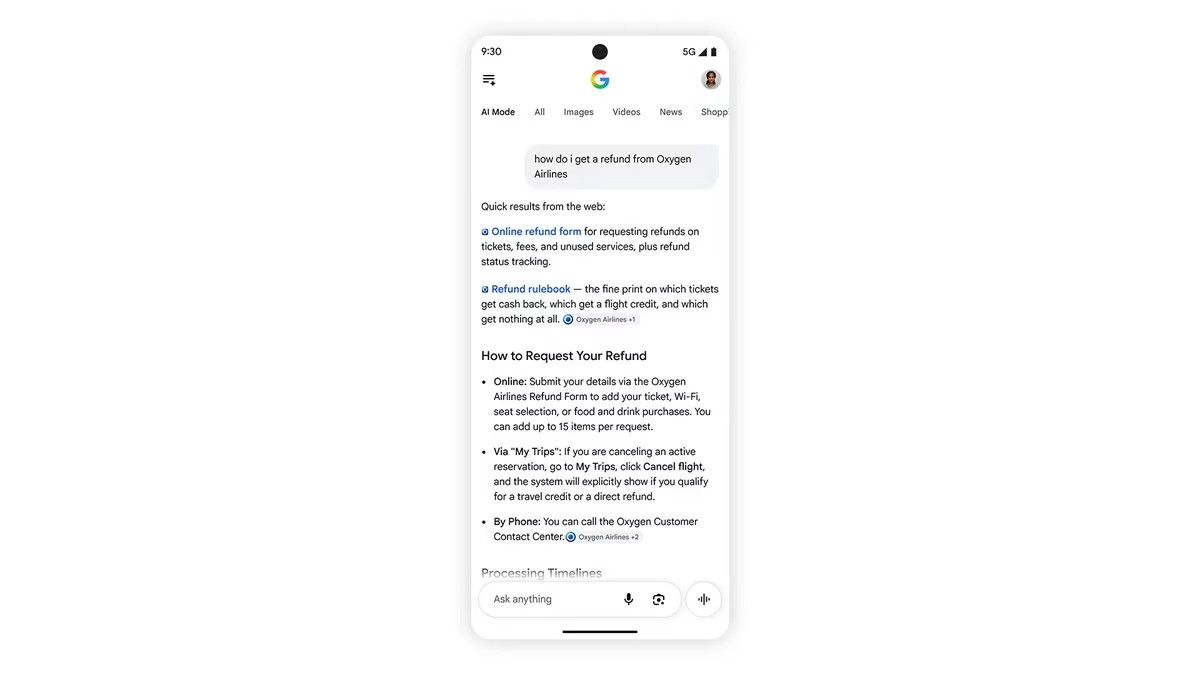
In its October 15 announcement, Google presented changes to AI Mode and AI Overviews. The company is rolling out changes to display links within the text closer to the beginning of answers and expanding news carousels to more locations and languages. Links to related articles at the end of some answers are getting thumbnails and greater prominence.
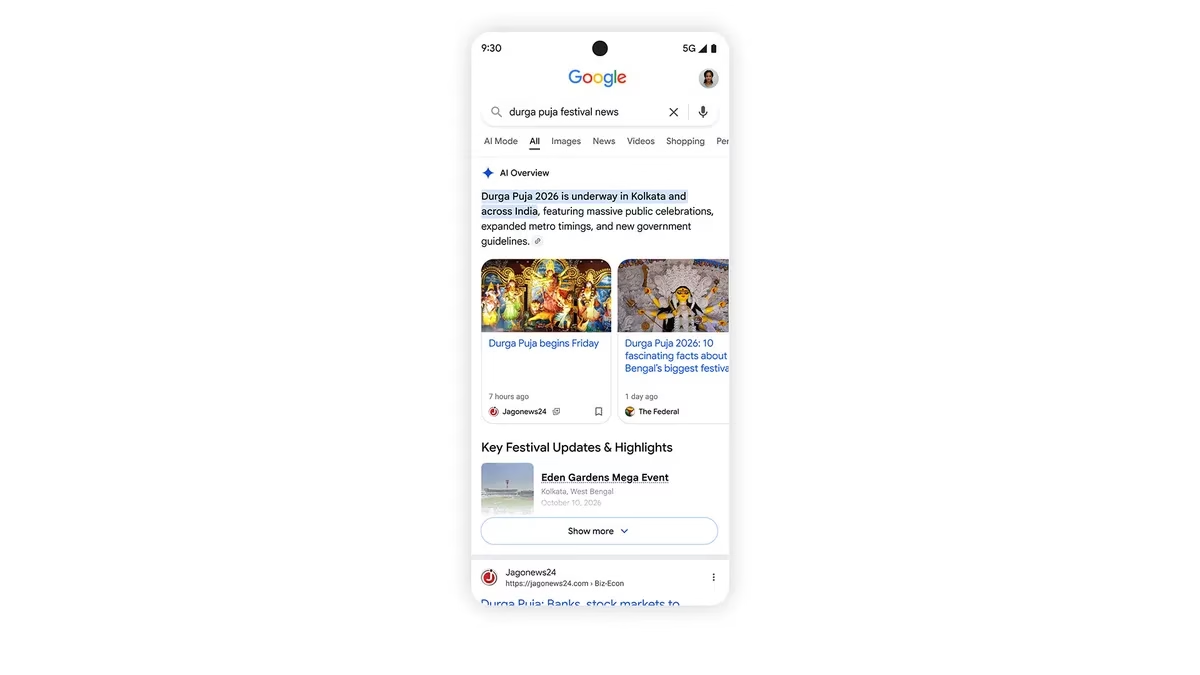
Two other initiatives are tests: a section at the top for official pages, with explanations of why they are useful, and clickable creator and publisher names in video results in AI Mode, leading to Search profiles. The announcement does not list the new countries and languages for the carousels or confirm that the entire package is available in Brazil.
Profiles have an additional limitation. The documentation for creating Search profiles lists Canada, India and the United States. It requires the person responsible to be an adult, content that complies with the policies and at least 10,000 followers or subscribers on one of the supported platforms: YouTube, Instagram, X or TikTok. That eligibility does not amount to participation in the AI Mode test.
The extra tab often holds the important part
Think of a search about gaming performance. A standalone FPS figure has a remarkable ability to seem definitive. Open the review and you may find the resolution, preset, driver version, chosen scene and processor used. The figure may still be correct, but its usefulness changes considerably when the rest of the context comes with it.
That is a good way to judge any answer with sources: the path to the evidence needs to be short enough to become a habit. If checking a claim means hunting for a discreet icon, opening a list and guessing which page supports which passage, the interface is demanding effort from the very person who came looking for convenience.
Where the click takes you matters too. To check a specification, the right page from the manufacturer helps. To find out how a product behaves, it makes sense to look for an independent review. To understand a fault, a detailed account may be more useful than a generic description of the feature. The best source depends on the question, and a capable search engine should preserve those differences.
There is also a less obvious reward: finding a better question. You arrive wanting to know whether a particular piece of hardware is fast and discover that your real concern is power consumption, noise or compatibility. A good report can change the conversation because it has room to show what the summary left out. Browsing also makes room for that productive detour.
Who is speaking needs to remain visible
Recognizing authorship helps you assess information over time. A reader can follow people who test hardware with a consistent methodology, cover software closely or correct an article when new information emerges. That relationship becomes valuable when the subject is a sequence of updates rather than a question answered in thirty seconds.
Popularity, however, answers a different question. A large audience demonstrates reach; assessing the quality of a claim requires looking at the work. In a result about a specific bug, a little-known developer may have the most useful explanation. In a comparison, what matters is knowing how the test was conducted. Profile size alone does not settle either of those checks.
Providing context about publishers will be useful if it makes that judgment easier. Readers need to distinguish an opinion, promotional material, a test and reported journalism. An attractive presentation helps you find someone; the content needs to let you understand why to trust that person on that subject.
For websites, the outcome is still uncertain
MaisFPS has a direct interest in this discussion: this article also needs to be found and read. For a technology website, being cited may help someone discover its work. Even so, turning that discovery into a visit depends on a reader’s decision that no position on the screen can guarantee.
It is entirely possible for someone to see the source and consider the answer sufficient. Another person may open several articles to compare arguments. Some people may also click in search of a detail and close the page as soon as they find it. All are plausible situations; predicting which will prevail requires observing actual use, with meaningful ways of breaking down the data.
A serious assessment would need to track visits, types of queries and behavior after the click. It would also have to separate fluctuations caused by news, seasonality and changes in demand. Counting the links displayed is a starting point for assessing the interface. Understanding the effect on a publication requires following the story all the way to the website.
Publishers have a clear editorial responsibility: offer something worth the trip. An article that merely repackages the same announcement gives readers little reason to keep reading. Reproducible tests, explanations with context and analysis that supports its conclusions give readers concrete reasons to save an address and return.
The click needs to be worth the trip
The direction deserves credit when it makes checking, comparing and discovering easier. The practical test is simple to describe: can you identify the source near the claim? Does the destination answer the question? Is there room for a different interpretation? Can readers see what remains uncertain?
If the answers are good, there is a useful improvement even without turning every query into a marathon of tabs. Nobody needs to read five pages to find an opening time. But when the question involves choosing a product, understanding a change or forming an opinion, the ease of leaving the answer matters as much as the ease of receiving it. The web becomes more interesting when curiosity finds an open door.