Some car announcements make you think about your garage. The new Tesla Roadster makes you think about the boost button. Thrusters, movement through the air, a concept that seems to have escaped from a match of Rocket League: it is hard to read about this project without the kind of grin you get when you love technology precisely because, every now and then, it decides to go over the top.
That is our reaction at MaisFPS: we want an idea this wild to work. We also want the conversation to move beyond the initial astonishment. Because the most interesting part of bringing a video game fantasy into the physical world begins when someone has to turn that impossible input into an experience a person can understand, control and repeat.
First, let’s pick the right car
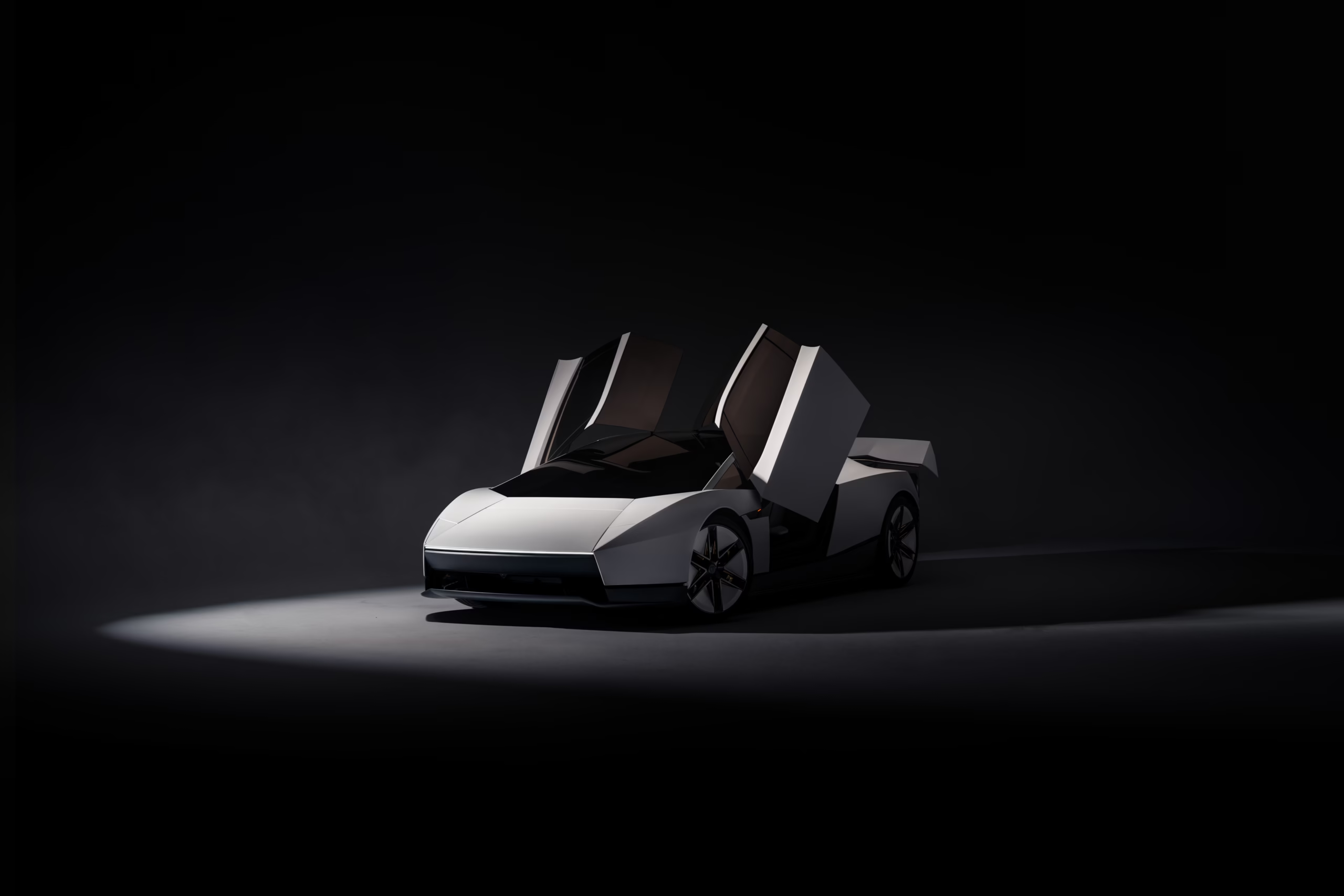
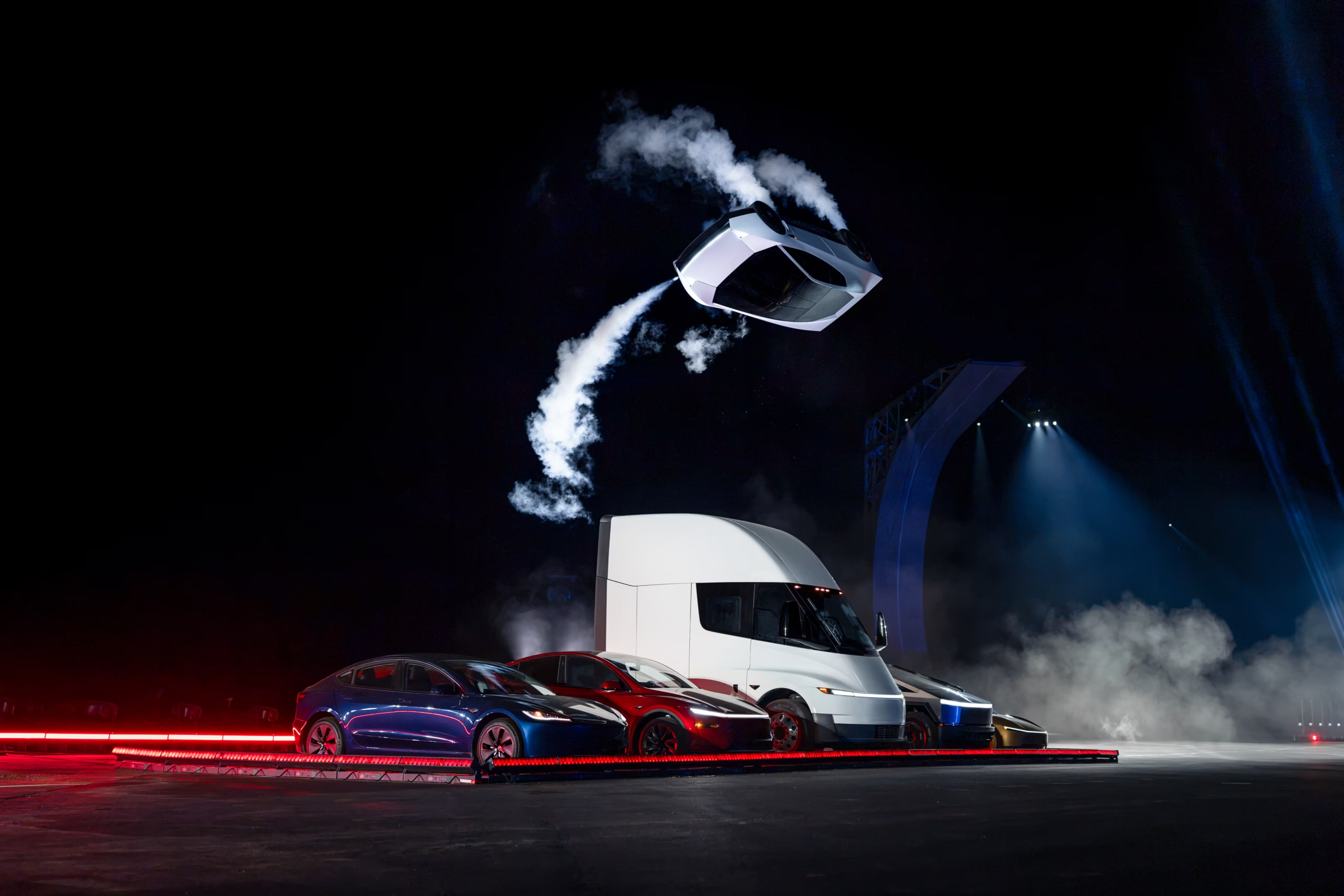
According to the Associated Press, Tesla unveiled the new Roadster on October 15 at a SpaceX facility in Texas. Elon Musk pointed to 2028 for the start of production, and no price was announced. So we are discussing a presentation and its promises, without a delivered car to evaluate yet.
Tesla’s official page distinguishes three configurations. Performance has two seats, active aerodynamics and suction. Thrust adds rear cold-gas thrusters and promises to accelerate from 0 to 60 mph, approximately 96.6 km/h, in under a second. Rocket has one seat, invitation-only access and thrusters around its perimeter for forward, upward and rotational movement. It comes with a warning that it is not approved for use on public roads.
The manufacturer explains that fans draw air out from beneath the vehicle, with a sealing system close to the ground, to generate a force that presses it against the surface. The thrusters, meanwhile, provide thrust. These are different features with different functions. They are also Tesla’s descriptions and claims, not the results of a MaisFPS test.
The fascination lies in changing the rules of play
For people who love games, the appeal goes beyond an impressive number on a spec sheet. A good piece of tech to play with changes the relationship between input and response. You discover a possibility, try to master it and start imagining what you could do with it. That is why a new movement can be more exciting than an increase in power.
The Roadster sparks that kind of curiosity. The comparison with Rocket League is a shortcut for the imagination: what if driving gained another dimension? But the interest lasts beyond the joke. A project that brings different areas of engineering closer together deserves attention for what it might teach us, even when its initial application is extravagant and intended for very few people.
We do not have to pretend that every advance must debut by solving the grocery run. There is room for machines built for the pleasure of exploring possibilities. If the result is an extraordinary piece of equipment for a very specific experience, that can have value in itself. The essential thing is to explain that experience with the same clarity used to sell the dream.
The real next level is giving the driver control
In a video game, pressing a button is usually the easy part. Knowing when to press it is what separates a great play from a disaster. When that logic moves into a real machine, the design also needs to look after someone who is still learning. The learning curve becomes a central part of the product.
That is where we would like to see Tesla put in the work: a clear explanation of what the driver can control, what the system handles and which conditions allow each feature to operate. How does the car communicate that a function is available? How does it warn you when it no longer is? What is the way to end an attempt safely? Those answers would make the proposal much more interesting.
A training simulator, for example, would be an excellent bridge to the gaming audience: learning procedures, understanding limits and practicing decisions before getting into the car. A guided experience in an appropriate environment would also help turn curiosity into skill.
Our enthusiasm would grow if the interface matched the mechanical ambition. An impressive system can still be difficult to use. When a person understands what is happening, anticipates the response and recognizes their own limits, the technology begins to make sense in their hands.
After the first boost, we want to know about the second
PC players know the difference between a nice peak on the frame counter and a whole session that runs smoothly. With the Roadster, our next question follows that logic: what would an afternoon of use be like? How many complete experiences could it hold? How much time would go into preparation, checks and allowing the systems to recover between one attempt and the next?
Depending on the answers, the idea could become even more appealing. A known limit lets you plan the fun. A clearly explained maintenance requirement lets you understand the commitment. What we would like is a complete picture of the experience, with the same care devoted to its most spectacular moment.
Independent tests would help a great deal at that stage. We would like to see documented conditions, repetition and explanations of the modes used. To evaluate the whole package, braking, cornering behavior and predictability would also matter. The acceleration figure starts the conversation; the behavior between one launch and the next is what would sustain our desire to stay in it.
What would make this excess truly useful?
Usefulness, here, can mean providing an exceptional experience. For that, we imagine a package in which the owner knows where to use each configuration, what preparation is required, what support they will have and how much it will cost to keep everything working. A supercar can be outrageous. The relationship with the person buying it should be understandable.
We would also like to follow what this engineering might produce beyond the flashiest demonstration. If its development leads to better controls, more predictable responses or new ways to make use of grip, there will be a valuable discussion to have. That is potential we hope to see explored, without treating it as a proven benefit or a promise that the technology will transfer to other vehicles.
Our view favors boldness. The Roadster has an idea that can make people who follow processors, consoles and games look at a car with real curiosity. Now we want to understand the whole experience: learning, driving, repeating, taking care of it and coming back for another session.
The Rocket League mode has already won our imagination. What could earn our lasting admiration is helping the driver understand every move. If Tesla can deliver that control along with the spectacle, it will have created something much more interesting than a launch that ends before we can finish saying “boost.”